Czesław Miłosz on Collective Memory Loss
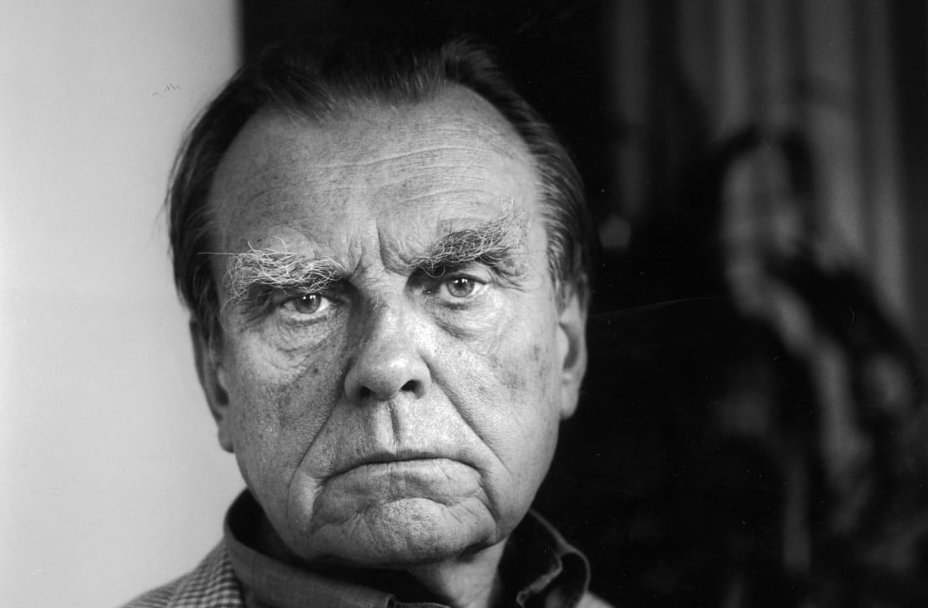
"A patron saint of all poets in exile, who visit their towns and provinces only in remembrance, is always Dante. But how has the number of Florences increased! The exile of a poet is today a simple function of a relatively recent discovery: that whoever wields power is also able to control language and not only with the prohibitions of censorship, but also by changing the meaning of words. A peculiar phenomenon makes its appearance: the language of a captive community acquires certain durable habits; whole zones of reality cease to exist simply because they have no name. There is, it seems, a hidden link between theories of literature as Écriture, of speech feeding on itself, and the growth of the totalitarian state. In any case, there is no reason why the state should not tolerate an activity that consists of creating «experimental» poems and prose, if these are conceived as autonomous systems of reference, enclosed within their own boundaries. Only if we assume that a poet constantly strives to liberate himself from borrowed styles in search for reality, is he dangerous. In a room where people unanimously maintain a conspiracy of silence, one word of truth sounds like a pistol shot. And, alas, a temptation to pronounce it, similar to an acute itching, becomes an obsession which doesn’t allow one to think of anything else. That is why a poet chooses internal or external exile. It is not certain, however, that he is motivated exclusively by his concern with actuality. He may also desire to free himself from it and elsewhere, in other countries, on other shores, to recover, at least for short moments, his true vocation – which is to contemplate Being.
That hope is illusory, for those who come from the 'other Europe', wherever they find themselves, notice to what extent their experiences isolate them from their new milieu – and this may become the source of a new obsession. Our planet that gets smaller every year, with its fantastic proliferation of mass media, is witnessing a process that escapes definition, characterized by a refusal to remember. Certainly, the illiterates of past centuries, then an enormous majority of mankind, knew little of the history of their respective countries and of their civilization. In the minds of modern illiterates, however, who know how to read and write and even teach in schools and at universities, history is present but blurred, in a state of strange confusion; Molière becomes a contemporary of Napoleon, Voltaire, a contemporary of Lenin. Also, events of the last decades, of such primary importance that knowledge or ignorance of them will be decisive for the future of mankind, move away, grow pale, lose all consistency as if Frederic Nietzsche's prediction of European nihilism found a literal fulfillment. 'The eye of a nihilist' – he wrote in 1887 – 'is unfaithful to his memories: it allows them to drop, to lose their leaves . . . And what he does not do for himself, he also does not do for the whole past of mankind: he lets it drop'. We are surrounded today by fictions about the past, contrary to common sense and to an elementary perception of good and evil. As The Los Angeles Times recently stated, the number of books in various languages which deny that the Holocaust ever took place, that it was invented by Jewish propaganda, has exceeded one hundred. If such an insanity is possible, is a complete loss of memory as a permanent state of mind improbable? And would it not present a danger more grave than genetic engineering or poisoning of the natural environment?
For the poet of the 'other Europe' the events embraced by the name of the Holocaust are a reality, so close in time that he cannot hope to liberate himself from their remembrance unless, perhaps, by translating the Psalms of David. He feels anxiety, though, when the meaning of the word Holocaust undergoes gradual modifications, so that the word begins to belong to the history of the Jews exclusively, as if among the victims there were not also millions of Poles, Russians, Ukrainians and prisoners of other nationalities. He feels anxiety, for he senses in this a foreboding of a not distant future when history will be reduced to what appears on television, while the truth, as it is too complicated, will be buried in the archives, if not totally annihilated. Other facts as well, facts for him quite close but distant for the West, add in his mind to the credibility of H.G. Wells' vision in The Time Machine: the Earth inhabited by a tribe of children of the day, carefree, deprived of memory and, by the same token, of history, without defense when confronted with dwellers of subterranean caves, cannibalistic children of the night."
Czesław Miłosz. "The Nobel Lecture, 1980." NobelPrize.org, available at https://www.nobelprize.org/prizes/literature/1980/milosz/lecture/.