Where Are the Musk Libraries?
This is Carnegie Library in Greenville, Ohio, where I grew up:
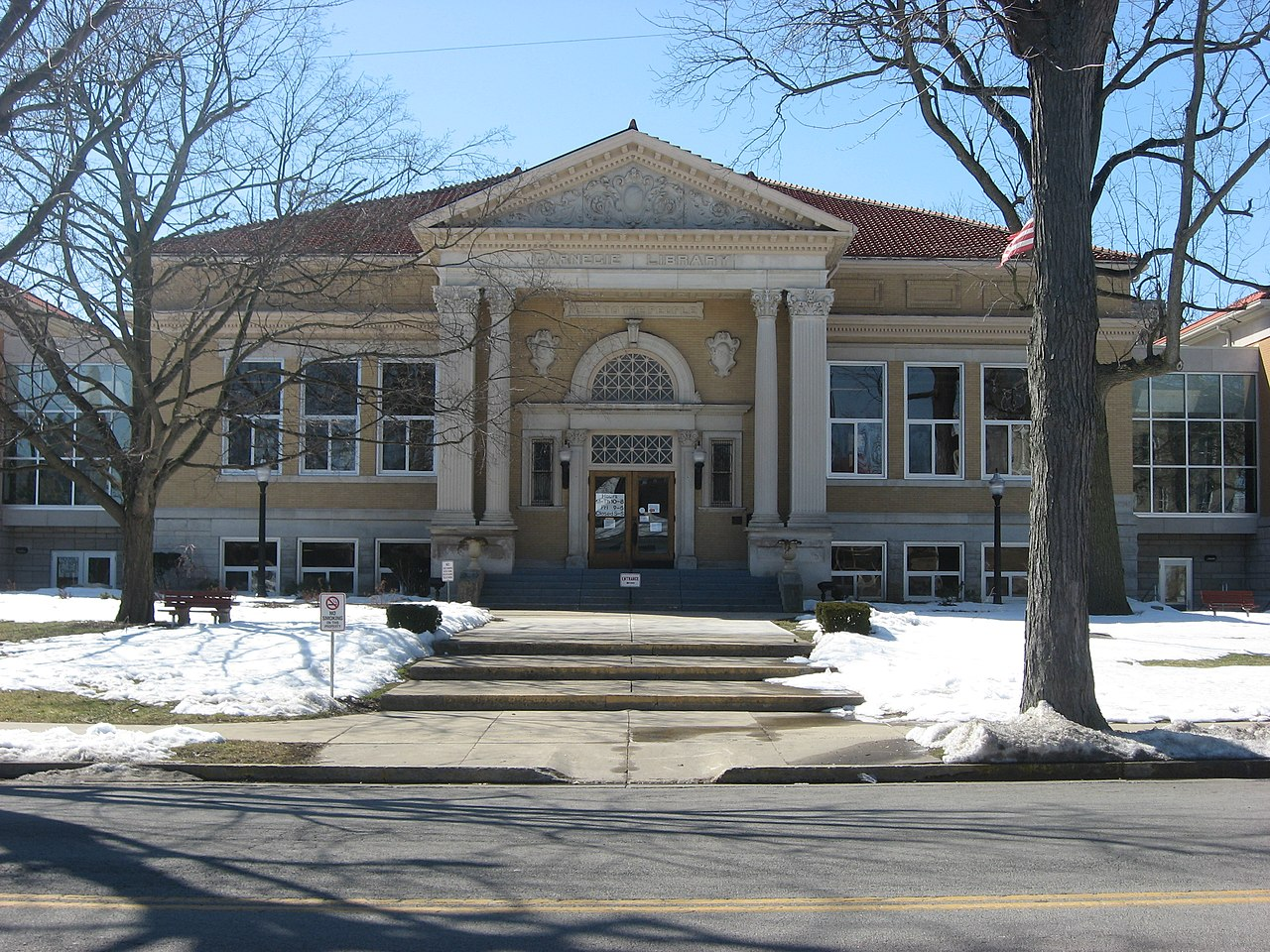
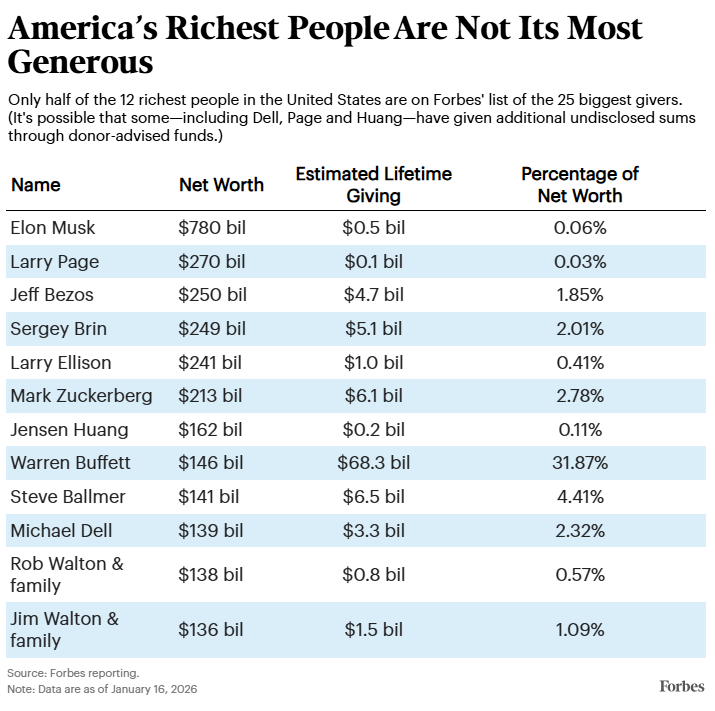
As the name implies, Andrew Carnegie donated most of the money required to build it. Construction was completed in 1903. At the time, Carnegie was probably the richest person in the world, with a net worth north of $300 billion in today's dollars. That would put him second behind Elon Musk on this Forbes list of America's wealthiest people today:
Carnegie ultimately gave away most of his wealth during his life, about 90% of it according to most estimates I could find. A lot of that philanthropy was dedicated to building public libraries such as the one in Greenville.
Now look again at that Forbes list. Elon Musk has given away 0.06% of his wealth. Larry Page has given away 0.03%. Jeff Bezos has given away 1.85%. And on and on. Warren Buffett is the only one to stand out (in a good way) at 31.87%.
This post isn't meant to paint Carnegie as a saint. He was rightly criticized as a robber baron who got rich off ruthless business practices that included abusing his workers. But the scope of his philanthropy can't be denied.
I can't overstate how important Carnegie Library was to me and other kids growing up in Greenville. I still remember the smell of the place, countless trips with my mom, lingering in the kids section. I don't know where the next closest library was, but it wasn't anywhere close. Thankfully, we didn't have to go anywhere else. It's still there, still serving the community, almost 125 years after it was built.
Which leads to the question: What are Elon and the rest leaving for us and our kids and grandkids and great-grandkids? We've collectively decided we can't tax them because that's un-American. So, we've let their wealth grow to the sky and beyond, to Mars and beyond, out beyond Neptune and into the Oort cloud. It's a level of wealth our simple human brains can't comprehend. So much could be done with it, but we've left it up to them. So, again: What are they leaving for us? Where are the libraries, literal or figurative, that will still be here 125 years from now?
The answer, we all should know by now, is that there aren't any, not today and probably not tomorrow, either. Which leaves us with the question of what we're going to do about that.